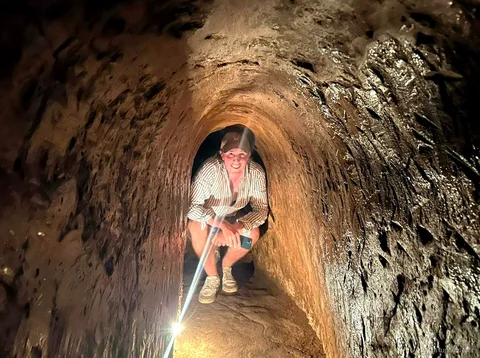
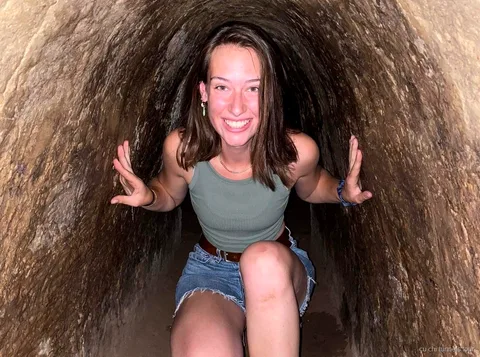
A cu chi tunnels tour takes you underground into part of a tunnel network that once stretched around 220 kilometers beneath the countryside northwest of Ho Chi Minh City. Visitors walk a shaded jungle trail past camouflaged trapdoors and a mock booby trap display, then crawl through a section of tunnel that has been widened for tourists, with exits spaced along the way for anyone who wants out early. Most trips run as a half day, leave straight from a central Ho Chi Minh City hotel, and end with an optional shooting range where you can fire a real AK-47 or M16 for a per-round fee. This guide compares the main ticket types, prices and departure options so you can pick the right one before you book.
What Is the Cu Chi Tunnels Tour?
The Cu Chi Tunnels tour is a guided half-day or full-day trip to a real Vietnam War tunnel network, where a local guide walks you through the history, the tunnel crawl and the surrounding jungle trail. It suits history buffs, first-time visitors to Ho Chi Minh City and anyone who wants a hands-on stop beyond the city’s museums and markets.
Most operators run the same basic format: hotel pickup, a scenic drive out of the city, the documentary and jungle trail on arrival, the tunnel crawl, an optional shooting range, and a return drive back to District 1. What changes between listings is the site visited, the group size, the vehicle and whether extra stops like the Mekong Delta or a Cao Dai temple are bundled into the same day.
The tunnels themselves were dug by hand starting in the anti-French resistance period and expanded heavily during the Vietnam War, when they served as hiding spots, supply routes, kitchens and even small hospitals for Viet Cong fighters. Today, two sections are open to visitors: Ben Dinh, the closer and busier site, and Ben Duoc, a quieter stretch of the same network further from the city. Nearly every tour also includes a short black-and-white documentary before the walking starts, which explains how the tunnels worked and why the network mattered so much during the war.
Compared to a museum visit in the city center, the appeal here is physical rather than just visual. You are not reading a plaque behind glass, you are crouching through a real passage that guerrilla fighters once used to move unseen. That hands-on element is a big part of why the site remains one of the most searched day trips from Ho Chi Minh City, alongside the War Remnants Museum and the Mekong Delta.
Prices for a Cu Chi Tunnels tour range from around €9 for a basic half-day group tour up to €87 for a luxury speedboat trip, with most standard options landing between €14 and €25 per person. The gap comes down to transport, group size and whether the tour bundles in extra stops.
The cheapest tickets cover a shared bus, an English-speaking guide, entry fees and a bottle of water, with the shooting range sold separately on site. Mid-range tours in the €20 to €30 bracket usually add a private vehicle, a smaller group or a Mekong Delta cruise onto the same day. At the top end, VIP and speedboat products swap the bus for a limousine or a river boat that skips highway traffic entirely, which is why they cost several times more than the basic ticket.
It helps to separate the raw entrance fee from the all-in tour price, since online listings and forum posts often quote different numbers without saying which one they mean. The entrance fee alone is a small part of the total cost. Most of what you pay for covers transport, the guide’s time and hotel pickup, which is why a self-drive visit rarely saves as much money as it first appears to. For a full breakdown by ticket type, including child and Vietnamese-resident pricing, see our Cu Chi Tunnels tickets and prices guide.
Ben Dinh vs Ben Duoc: Two Different Tunnel Sites
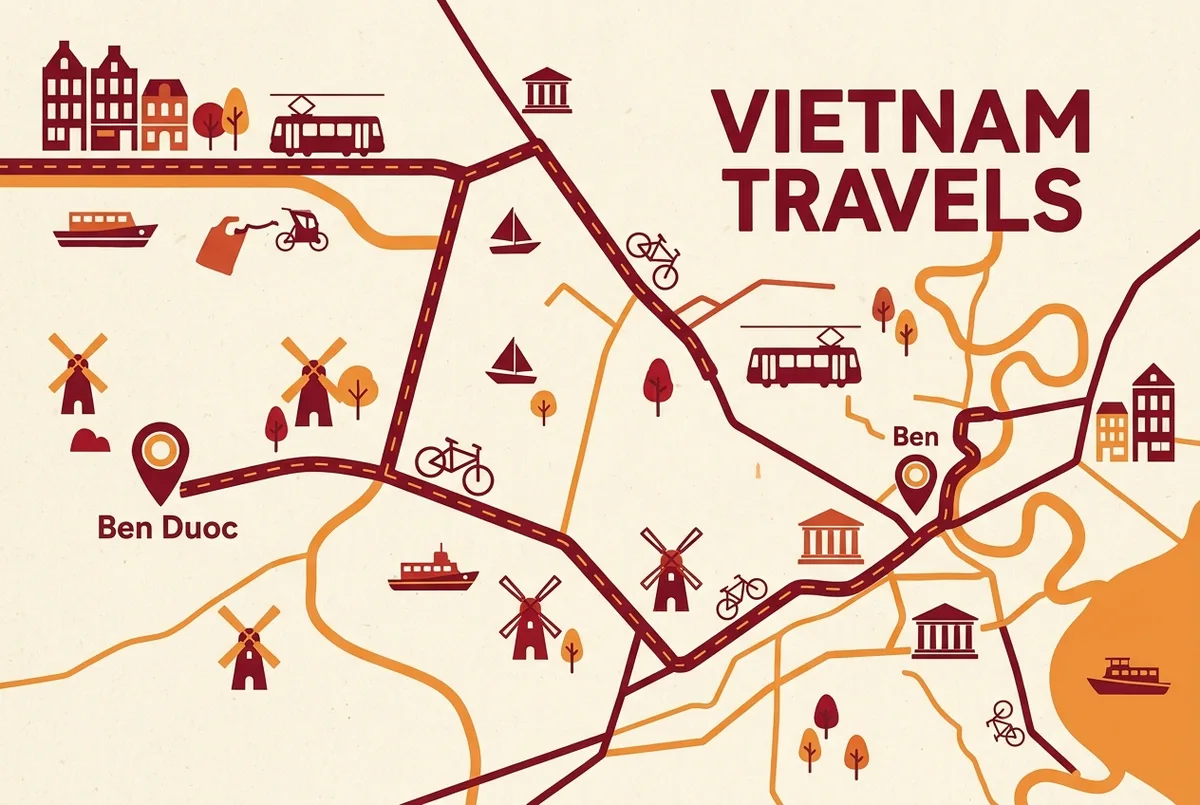
One detail that trips up a lot of first-time bookers is that “Cu Chi Tunnels” actually refers to two separate visitor sites on the same underground network. Ben Dinh sits closer to Ho Chi Minh City, at around a 90-minute drive, and is where the large majority of group tours go. It gets busy by mid-morning, especially in high season, since it is the default stop for almost every operator.
Ben Duoc lies further into Cu Chi District, closer to a 2-hour drive, and sees noticeably fewer visitors. The underground kitchens, meeting rooms and trap displays are similar at both sites, so the choice mostly comes down to how much a quieter, less rushed visit is worth to you against a slightly shorter travel day. Our Ben Dinh vs Ben Duoc comparison breaks down crowd levels, tunnel width and distance for both sites side by side.
How Do You Book a Cu Chi Tunnels Tour and Skip the Line?
Booking online in advance is the easiest way to skip the ticket line at the entrance gate, since your seat, guide and entry fee are already confirmed before you arrive. Most operators also throw in hotel pickup, which removes the need to arrange your own transport out to Cu Chi District.
Group tours typically depart at 8:00am or 12:00pm from central hotels in District 1, 3 or 4, so check that your accommodation falls inside the pickup zone before booking. Free cancellation windows are common on most listings, which is useful in a city where weather and flight schedules can shift plans at short notice.
If a shared bus with a fixed departure time does not suit your plans, a private tour swaps the group vehicle for your own car and driver, with pickup and return times built around your schedule instead of a set slot. It costs more than the standard group ticket but removes the wait for other travelers to board and lets you set your own pace at the site. If you are still deciding between the standard group option, a private vehicle or a full-day combo, our half-day Cu Chi Tunnels tour guide compares the morning and afternoon departures in more detail.
When Is the Best Time to Visit the Cu Chi Tunnels?
The dry season, roughly December through April, gives the most comfortable conditions for a day that involves a lot of walking outdoors. Rain and higher humidity from May through November can make the jungle trail slippery and the underground sections stuffier than usual.
Within any month, a morning departure beats an afternoon one for both temperature and crowd size, since the site gets hotter and busier as the day goes on. If you can only travel in the wetter months, aim for an early morning slot and bring a light rain jacket, since brief downpours are common but rarely last long. Whatever the season, direct sun is a bigger factor than most visitors expect, so a hat and water matter as much as the calendar date.
School holidays and major Vietnamese public holidays also push crowd numbers up at both tunnel sites, so a weekday visit outside those windows tends to feel calmer than a weekend one. None of this changes the entrance fee, but it does change how long you wait to walk through the more popular sections of tunnel and how easy it is to hear your guide over the crowd.
How Do You Get to the Cu Chi Tunnels from Ho Chi Minh City?
Cu Chi District sits about 70 kilometers northwest of central Ho Chi Minh City, which works out to roughly 90 minutes by road to Ben Dinh or closer to 2 hours to Ben Duoc. Nearly all visitors reach the site by tour bus, private car or public bus rather than driving themselves.
A booked tour is the simplest option, since the vehicle, guide and entry ticket are bundled into one price and pickup happens at your hotel door. Independent travelers can take a public bus from the city, though it takes longer overall and leaves a short walk to the entrance. A smaller number of visitors choose a speedboat along the Saigon River, which avoids road traffic completely and turns the journey itself into part of the experience. Our guide to getting to the Cu Chi Tunnels lays out the cost and travel time for every method, including transfers from the airport and from Phu My cruise port. For general trip planning around Vietnam, the country’s official tourism board is a useful outside reference.
What Should You Expect on the Tour?
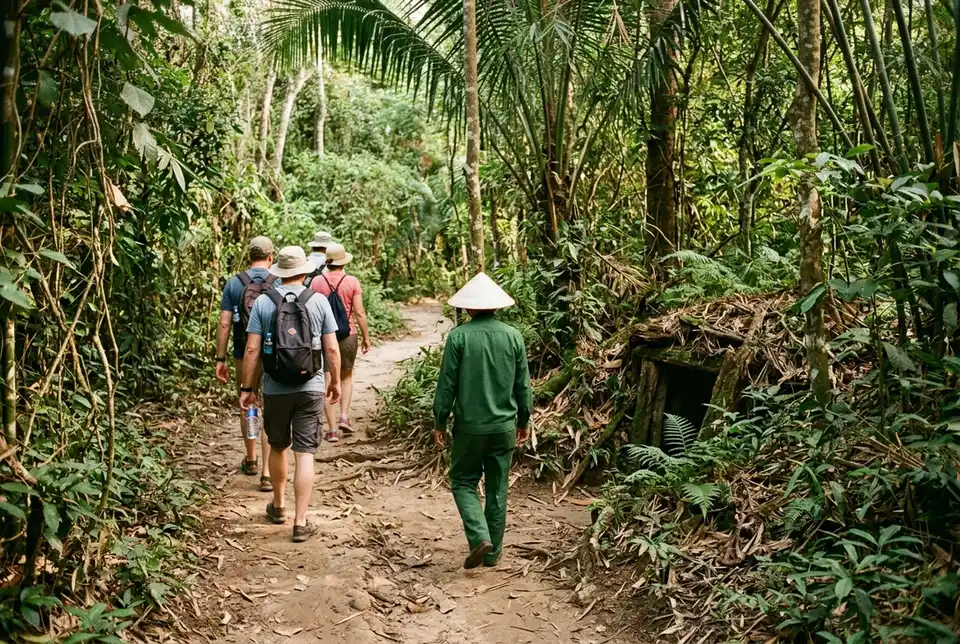
A typical day starts with pickup between 8:00am and 12:00pm, followed by the drive out of the city into open rice paddies and rubber plantations. At the site, a short documentary sets the scene before a guide leads the group along a dirt trail past camouflaged trapdoors, an outdoor kitchen display and a demonstration booby trap.
The highlight for most visitors is the tunnel crawl itself: a stretch of 20 to 40 meters that has been enlarged and reinforced for tourists, with escape hatches spaced along the route. It is hot, dark and genuinely tight, so anyone uneasy about small spaces can duck out early at the next exit rather than finish the whole section. Back above ground, most tours offer a taste of boiled tapioca with salt and peanuts, the food guerrilla fighters relied on underground, followed by an optional shooting range where AK-47 and M16 rifles are available for a per-bullet fee paid in cash. The return drive brings most groups back to central District 1 by mid-afternoon or early evening, depending on the departure slot.
Group sizes vary by operator, with standard bus tours running larger groups of 20 or more, while private and small-group products cap numbers much lower for a more personal pace. Guides generally speak clear English and are used to fielding questions about the war, the tunnels’ engineering and daily life underground, so it is worth asking anything that the documentary leaves out. Bathrooms and a rest area with basic snacks and cold drinks are available at the tunnel site itself, though options are limited compared to the city.
Who Is the Cu Chi Tunnels Tour Best For?
The Cu Chi Tunnels tour suits first-time visitors to Ho Chi Minh City, history-minded travelers, and anyone who wants a break from the city’s markets and museums for an afternoon. It also works for families, since the tunnel crawl and shooting range are both optional stops rather than required parts of the visit.
Travelers with mobility limits can still join, since walking the above-ground trail does not require entering the tunnels at all, though the jungle path itself is uneven in places. People prone to claustrophobia should plan to use one of the frequent exit hatches rather than skip the tour outright, since most of the visit happens outdoors. Our Cu Chi Tunnels visitor guide covers packing lists, accessibility notes and what to expect underground in more depth.
A Short History of the Cu Chi Tunnels
The tunnel network at Cu Chi began during the resistance against French colonial rule in the late 1940s and grew enormously during the Vietnam War, when local fighters expanded it into a network stretching roughly 220 kilometers. Below ground, builders carved out kitchens with smoke vents that dispersed far from the entrance, simple hospitals, meeting rooms and storage areas, letting people live and operate almost entirely out of sight.
The tunnels let fighters move supplies, stage ambushes and disappear back underground before opposing forces could respond, which made the area notoriously hard to control despite repeated attempts to flush it out. Visiting today gives context that a textbook page cannot: the tight crawl spaces, the hidden trapdoors and the makeshift booby traps on display all come from a real, physically demanding way of life.
At the Ben Duoc site, a tall memorial temple stands as a more solemn counterpoint to the tunnel crawl, inscribed with the names of soldiers who died in the area during the war. It is a reminder that this stretch of countryside was not just a tactical network but a place where a great many people lived, fought and did not make it home. Guides typically weave this context into the visit rather than presenting it as a separate stop, so even a standard half-day tour touches on more than just the tunnels themselves. For a deeper account of how the network was built and used, see our full history of the Cu Chi Tunnels or the background entry on Wikipedia.
Insider Tips for Visiting the Cu Chi Tunnels
Book the earliest departure slot you can, since heat and crowd size both build steadily through the day. Wear closed shoes and clothing you do not mind getting dusty, since the jungle trail is uneven and can turn slick after rain, and the tunnel crawl involves genuine crouching and crawling.
Carry small cash for the shooting range and for drinks sold near the rest area, since card payment is rarely available this far outside the city. If you are prone to claustrophobia or back trouble, mention it to your guide before entering the tunnel section so they can point out the nearest exit hatch in advance. Pack a hat, sunscreen and a refillable water bottle, since long stretches of the visit happen outdoors in direct sun with limited shade.
Charge your phone or camera the night before, since the drive out and back leaves plenty of downtime but few charging points along the way. If you booked a morning tour, eat a proper breakfast beforehand, since the first meal stop for most itineraries is lunch back in the city rather than anything on site. Finally, keep your pickup confirmation handy on your phone, since drivers matching faces to a printed list at a busy hotel lobby is still the most common point of confusion on tour mornings.
Where to Eat and Stay Near the Cu Chi Tunnels
Almost nobody stays overnight near Cu Chi District itself, since the site works well as a single day trip from Ho Chi Minh City. Basing yourself in District 1 keeps you within the free hotel pickup zone that most tours offer and puts you close to restaurants for the evening after you return.
On site, expect a simple tapioca and tea tasting included on most tours, plus small stalls selling drinks and snacks near the rest area. If you have a full day free, some operators pair the tunnels with a stop at the War Remnants Museum back in the city center, giving a fuller picture of the same period of history.
Most full-day itineraries build in a proper Vietnamese lunch, whether that is a set menu near the tunnel site or a stop in My Tho if the day includes a Mekong Delta cruise. Back in Ho Chi Minh City that evening, District 1 and District 3 have the widest range of restaurants within easy walking distance of most hotels, from street-side pho stalls to sit-down Vietnamese and international menus. Our where to eat and stay guide covers pickup-zone hotel picks and food options in more detail.