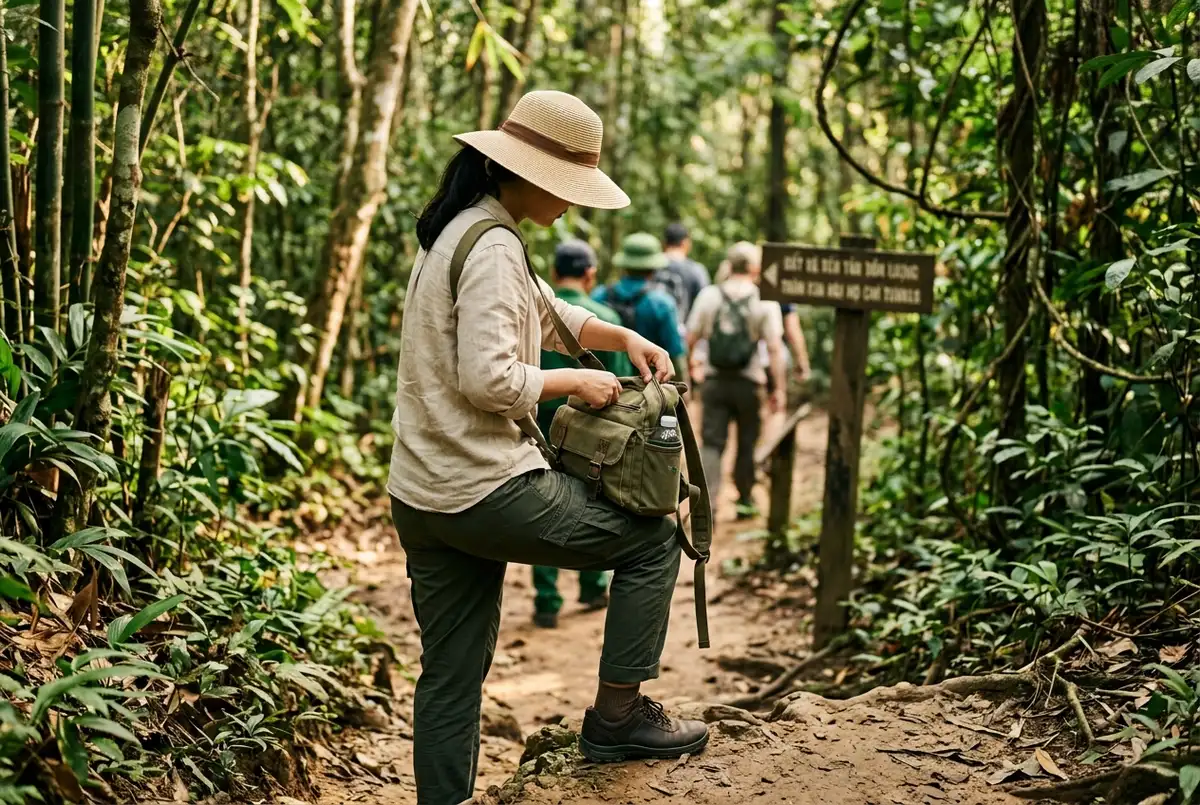
This Cu Chi Tunnels visitor guide boils down to five things: closed shoes, light breathable clothing, sun protection, small cash for the shooting range and museum stalls, and a bit of patience for heat and uneven ground. Get those five right and the rest of the day, the documentary, the jungle trail and the optional tunnel crawl, takes care of itself.
What Should You Pack for a Cu Chi Tunnels Visit?
A short packing list covers almost everything you actually need: closed, comfortable shoes rather than sandals, light breathable clothing you do not mind getting dusty, a hat or cap, sunscreen, and small Vietnamese dong in cash. Bottled water is usually included on guided tours, but bringing a personal bottle to refill never hurts on a hot day.
Beyond those five essentials, a small daypack for a phone, wallet and sunscreen is genuinely useful, since you will be walking and standing for a few hours with limited places to set things down. A light towel or bandana for wiping off sweat before getting back into an air conditioned vehicle is a small comfort many first time visitors wish they had packed.
What Is the Cu Chi Tunnels Dress Code?
There is no strict, enforced cu chi tunnels dress code, but the site’s terrain and climate make some choices far more comfortable than others. Closed shoes matter more than almost anything else on this list, since the jungle trail is uneven, can be slick after rain, and the tunnel crawl itself is rough underfoot. Light, breathable fabrics in neutral colors handle heat and dust better than anything heavy or dark.
Shorts or lightweight trousers both work fine, and there is no religious or cultural dress requirement at the tunnel site itself, unlike some temples elsewhere in Vietnam. The practical concerns, heat, dust and uneven ground, matter far more here than any formal dress code.
What Should You Wear to the Cu Chi Tunnels?
Cu chi tunnels what to wear comes down to closed toe shoes, light colored breathable clothing, and a hat or cap for sun protection during the outdoor walking sections. Sneakers or light hiking shoes handle the uneven jungle trail and the tunnel crawl far better than sandals or flip flops, which offer no protection if you catch your foot on a root or a rough tunnel wall.
Avoid anything overly tight or restrictive, since the tunnel crawl itself requires a reasonable amount of movement in a cramped space. A light long sleeved shirt is worth considering for sun protection on the walk, even in warm weather, since shade is limited along most of the outdoor trail.
How Much Cash Should You Bring to Cu Chi Tunnels?
Bring enough small cash to cover the optional shooting range, priced per bullet and paid on site, plus any snacks, drinks or souvenirs from the stalls near the rest area. Card payment is rarely available this far outside Ho Chi Minh City, so cash is the only reliable option once you arrive at the site itself.
A rough estimate of 200,000 to 500,000 dong per person covers a modest shooting range session plus drinks and small purchases, though your actual spend depends entirely on how many bullets you decide to fire and whether you buy souvenirs. Our tickets and pricing pillar at Cu Chi Tunnels Tickets: Prices, Entrance Fees and How to Book breaks down the base entrance and tour costs in more detail if you want the full picture before you go.
What Should You Expect on the Jungle Trail Walk?
Expect direct sun, humidity and uneven ground on a shaded but not fully covered dirt path that winds past camouflaged trapdoors, a mock booby trap display and the smokeless kitchen system fighters relied on during the war. The walk itself is not physically demanding, but the heat can be draining if you are not used to a tropical climate, so pacing yourself and taking water breaks matters more than it might sound.
Guides typically stop at each display to explain its history and function, so the walk moves at a reasonable pace rather than a rushed march through the site. Wearing the closed shoes and light clothing covered above makes this stretch of the visit noticeably more comfortable.
What Happens During the Tunnel Crawl?
The tunnel crawl is optional and involves moving through a widened section of tunnel, typically 20 to 40 meters, that has been enlarged specifically for tourists compared with the much narrower original wartime passages. Exit hatches are spaced along the route, so anyone who finds the heat, darkness or tight space overwhelming can leave early rather than completing the full stretch.
The experience is hot, dark and genuinely tight even in its widened tourist form, which is worth knowing before you decide whether to attempt it. Readers specifically worried about this part of the visit should see our dedicated guide, Is the Cu Chi Tunnels Tour Safe? Claustrophobia and Physical Difficulty, which covers tunnel dimensions and exit frequency in full detail.
What Is the Cu Chi Museum Like?
The cu chi museum area at the tunnel site displays wartime artifacts, photographs and reconstructed scenes alongside the outdoor trail, giving visitors a more traditional exhibit style complement to the hands on trapdoors and tunnel crawl outside. Exhibits typically cover the network’s origins, its wartime role and some of the personal stories connected to the district’s history.
Most visitors spend a modest amount of time here compared with the outdoor sections, since the trail and tunnel crawl are the main draw for most tour itineraries. Even a brief walk through adds useful context if you have not read up on the tunnels’ history beforehand.
What Other Things Are There to Do at Cu Chi?
Beyond the tunnels themselves, things to do in cu chi typically include the documentary screening at the start of a visit, the museum style exhibit area, the optional shooting range, and at Ben Duoc specifically, the nine story war memorial temple with its wall of inscribed names. Some combo tour itineraries add a stop at the Agent Orange Center or a nearby lacquerware workshop on the drive out.
Readers deciding between the two preserved entrances, Ben Dinh and Ben Duoc, will find the memorial temple is one of the main differences worth weighing before you book.
Is the Cu Chi Tunnels Visit Physically Demanding?
The visit involves a fair amount of walking on uneven, sometimes slick ground, plus standing through the documentary and waiting periods between stops, but it does not require any specialized fitness beyond being comfortable on your feet for a few hours in heat and humidity. The optional tunnel crawl is the single most physically demanding element, and it can be skipped entirely without missing the rest of the tour.
Travelers with mobility concerns or older family members should see our companion guide on accessibility for a fuller picture of which parts of the site are easiest to navigate and which require more physical effort.
Is Cu Chi Tunnels Good for Kids and Families?
The site works reasonably well for families, since both the tunnel crawl and the shooting range are optional stops that children can simply skip, while the outdoor trail and displays hold genuine interest for many kids curious about the history. The introductory documentary contains some wartime imagery worth previewing if you are traveling with younger or more sensitive children.
Our companion guide on visiting with kids covers minimum age considerations and which parts of the standard tour route warrant extra preparation for a family visit.
When Is the Best Time to Visit the Cu Chi Tunnels?
Morning departures reach the site while it is cooler and ahead of the bulk of tour buses, making for a noticeably more comfortable walk than an afternoon slot during the hottest part of the day. Dry season months, roughly December through April, also bring more predictable weather than the rainy season, when afternoon downpours are common.
Our companion guide on weather and the best season breaks down monthly averages in more detail if you are still deciding when to schedule your trip to Ho Chi Minh City.
What Should You Know Before Booking a Cu Chi Tunnels Tour?
Most standard tours bundle hotel pickup, transport, entry, a guide and the introductory documentary into one price, with the shooting range as the main common add-on cost paid separately in cash. Reading exactly what is included, rather than assuming every listing covers the same stops, avoids surprises once you arrive at the site.
What Are the Best Insider Tips for a Cu Chi Tunnels Visit?
Book the morning slot if your schedule allows it, since it is the single biggest factor in how comfortable your visit feels once the sun climbs higher over the trail. Pack a printed or downloaded copy of your booking confirmation, since patchy signal near the site can make pulling up an email or app on your phone more frustrating than it needs to be.
Arrive at your pickup point five minutes early rather than right on time, since holding up a group departure over a late arrival is an easy, avoidable stress for everyone else on the tour. If you know in advance that you want to skip the tunnel crawl or the shooting range, mentioning it to your guide early in the day lets them plan the group’s pacing around you rather than working it out on the spot. Finally, a spare plastic bag for a sweaty shirt or dusty shoes on the ride home is a small thing most first time visitors wish someone had told them to pack.
What Should You Know About Photography and Etiquette at the Site?
Photography is generally welcome throughout the outdoor trail, the museum area and the trap displays, though flash photography inside the tunnel crawl itself is best avoided out of consideration for other visitors moving through the same tight space. Some indoor exhibit areas post their own photography rules, so it is worth glancing at any posted signage before taking pictures inside the museum building specifically.
Given the site’s history as a genuine wartime memorial rather than a purely recreational attraction, a respectful tone matters, particularly around the documentary screening and the Ben Duoc memorial complex if that stop is part of your itinerary. Loud or overly casual behavior during these moments tends to stand out, and most guides appreciate visitors who treat the more solemn stops with the same attention they give the hands on displays.
How Long Should You Budget for a Full Cu Chi Tunnels Day?
A standard half-day tour runs roughly 7 to 8 hours door to door once you include the drive each way, with actual time at the site itself closer to 2 to 3 hours once the documentary, the walking route, the tunnel crawl and the tapioca tasting are all accounted for. Building in a little flexibility around your expected return time, rather than scheduling something immediately afterward, helps absorb the traffic delays that are common on the drive back into Ho Chi Minh City during busier parts of the day.
Travelers pairing the tunnels with a second destination in one day, whether that is the War Remnants Museum, the Mekong Delta or a Cao Dai Temple stop, should budget considerably more time and expect a longer, more tiring day overall. A straightforward standard half-day tour remains the simplest option if a single destination day suits you better.
What Are the Most Common Mistakes First Time Visitors Make?
The most common mistakes are wearing sandals instead of closed shoes, forgetting cash for the shooting range and drinks, underestimating the heat and skipping sun protection, and not asking about hotel pickup coverage before booking a tour that turns out to require a walk to a fixed meeting point. Each of these is easy to avoid once you know about it in advance, which is exactly the purpose of a checklist like this one.
A smaller but real mistake is not mentioning claustrophobia or physical limitations to your guide before the tunnel crawl, since guides can point out the nearest exit hatch in advance if you flag a concern before entering rather than partway through.
What Should You Do If You Feel Overwhelmed by Heat or the Tunnel Crawl?
Step back, find shade and drink water if the heat becomes overwhelming during the outdoor walk, and simply exit at the next available hatch if the tunnel crawl feels too tight or too hot to continue. Guides are used to visitors stopping partway through the crawl and will not treat it as unusual or embarrassing.
Pacing yourself, taking the exits seriously as a real option rather than a last resort, and telling your guide about any concerns before you start are the simplest ways to keep a hot, humid day from turning uncomfortable.
What Other Cu Chi Tunnels Guides Should You Read?
The practical side of a Cu Chi visit connects to several other pages worth reading before you book:
General travel planning resources for Vietnam are available at the official Vietnam Tourism site, useful for broader trip logistics beyond this single attraction.
Ready to plan your visit? Our standard cu chi tunnels tour bundles hotel pickup, transport, entry and a guide into one straightforward booking, covering everything mentioned in this guide. Browse every cu chi tunnels tour format on our Cu Chi Tunnels tour homepage before you book.
Frequently Asked Questions
What should I wear to the Cu Chi Tunnels?
Closed shoes, light breathable clothing and a hat or cap. Avoid sandals, since the jungle trail is uneven and the tunnel crawl requires solid footing.
How much cash should I bring?
Enough for the optional shooting range and any drinks or souvenirs, since card payment is rarely available this far outside Ho Chi Minh City. Roughly 200,000 to 500,000 dong per person is a reasonable estimate.
Is the tunnel crawl required?
No, it is entirely optional, and exit hatches are spaced along the route for anyone who wants to leave early.
Is a visit to the Cu Chi Tunnels good for kids?
It can work well for families, since both the tunnel crawl and the shooting range are optional, though the introductory documentary contains some wartime imagery worth previewing beforehand.
What is the best time of day to visit?
Morning departures are cooler and less crowded than afternoon ones, making for a more comfortable walk along the outdoor trail.