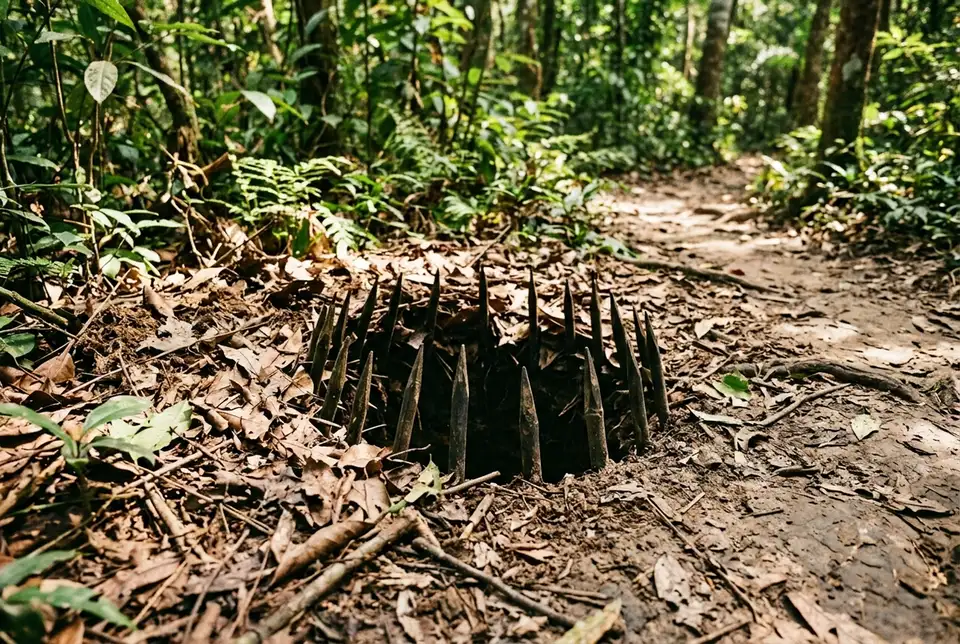
Cu Chi Tunnels booby traps were handmade devices, mostly hidden pits lined with sharpened bamboo spikes, designed to slow or injure aboveground patrols moving through the jungle near tunnel entrances. Every standard tour stops at a small display of these traps, and knowing the names and mechanics behind each one turns a row of spiked pits into a much clearer picture of how the network defended itself.
What Were the Cu Chi Tunnels Booby Traps Designed to Do?
The traps at Cu Chi were never meant to be the main line of defense. Their real purpose was to slow down and injure aboveground patrols long enough for fighters to retreat underground or reposition, buying time rather than stopping an advance outright. This defensive logic is central to cu chi tunnels guerrilla warfare, where avoiding direct, prolonged combat against a better equipped force mattered more than winning any single confrontation.
Traps were placed along likely patrol routes and near tunnel entrances specifically, concentrated where the payoff of slowing an advancing unit was highest rather than scattered evenly across the district.
What Are the Main Types of Cu Chi Tunnels Traps on Display?
Tour displays typically show a handful of named trap designs, each built around the same basic idea of a hidden pit or swinging mechanism triggered by a patrol member’s own movement.
Trap name
How it worked
Swinging trapdoor
Camouflaged panel that dropped a person onto spikes below
Clipping armpit trap
Hinged spikes that swung inward when disturbed
Rotating spike trap
Spiked log that rotated on an axle when stepped on
Fish trap
Angled spikes that allowed entry but tore on exit
Pit and pole trap
Concealed pit with spikes set at an angle for maximum injury
Each design relied on camouflage as much as the spikes themselves, since a visible trap was a useless one. Foliage, false ground cover and careful trail placement did as much work as the mechanism underneath.
How Were the Cu Chi Tunnels Traps Actually Built?
Builders used bamboo, since it was abundant locally, easy to sharpen and strong enough to hold an edge after fire hardening the tips. Pits were dug by hand, spikes set at angles calculated to catch a falling or stepping body rather than a straight drop, and the whole trap disguised with a thin covering of leaves, dirt or woven mats matched to the surrounding jungle floor.
Construction quality varied depending on how much time and material a particular unit had available, which is why some cu chi tunnels traps preserved today are more elaborate than others even within the same display area.
Why Did Bamboo Spikes Work So Well as a Weapon?
Bamboo held an edge well once fire hardened and was locally abundant, making it a practical material for a resistance movement that could not rely on manufactured weapons or steady supply lines. Wounds from bamboo spikes were also prone to infection in Vietnam’s humid climate, which meant even a non-fatal injury could take a soldier out of action for an extended recovery period.
This combination, low cost, local availability and a high chance of disabling rather than killing outright, made bamboo traps a genuinely effective part of the network’s broader defensive strategy.
How Did Traps Fit Into the Wider Guerrilla Warfare Strategy?
Traps worked alongside the tunnels themselves, camouflaged entrances and a deep local knowledge of the terrain to make Cu Chi District costly and exhausting for aboveground forces to operate in. Rather than a single decisive battle, the strategy relied on constant small setbacks, a wounded soldier here, a delayed patrol there, that accumulated over time and drained morale as much as manpower.
Accounts from the war suggest the traps had a real psychological effect beyond the physical injuries they caused, since the constant possibility of a hidden trap forced patrols to move far more slowly and cautiously through Cu Chi District than they otherwise would have. That caution alone gave tunnel fighters valuable time to retreat, hide supplies or reposition before a patrol closed in.
The traps were rarely the direct cause of major casualties on their own, but their contribution to slowing movement and raising tension made them a meaningful part of the network’s overall defense.
Who Were the Traps Used Against?
Traps targeted aboveground search and patrol units moving through Cu Chi District, including both South Vietnamese and allied American forces conducting operations meant to locate and clear sections of the tunnel network. Specialized units known as tunnel rats, tasked with entering the tunnels directly, faced these traps both inside the passages and along the surface trails leading to entrances.
The traps were not indiscriminate. Placement concentrated on routes patrols were likely to use, based on local fighters’ detailed knowledge of the surrounding terrain built up over years of operating in the same district.
Can You See Real Traps on a Cu Chi Tunnels Tour Today?
Every standard tour stops at a small outdoor display area showing reconstructed versions of the main trap types, safely fenced off and clearly labeled for visitors to view up close without any real risk. These are demonstration models rather than active traps, rebuilt specifically to give visitors a hands on sense of the mechanisms without any danger.
Guides typically explain how each trap worked as part of the walking route, though the level of detail varies, which is part of why background reading like this page helps visitors get more out of the stop than a quick glance at a plaque would offer alone.
What Should You Know Before Seeing the Trap Displays in Person?
The trap displays are a genuinely graphic part of the tour, since the mechanisms are designed around causing injury, and some visitors find the imagery more intense than they expected going in. Parents traveling with younger children may want to preview what the displays show, since the trap area is one of the more visually direct stops on the standard walking route.
Readers planning a family visit should see our companion guide on visiting with kids for more detail on which parts of the tour are appropriate for younger travelers and which stops warrant extra preparation beforehand.
How Do the Traps Connect to the Shooting Range Stop on a Tour?
The traps and the optional shooting range near the end of a standard tour both reflect the same underlying wartime context, hands on demonstrations of the tools and tactics fighters actually relied on during the conflict. Where the traps show defensive engineering, the shooting range gives visitors a direct, if very different, sense of the weapons carried by both sides during the war.
Visitors curious about this hands on side of the tour after seeing the trap displays often head next to the optional shooting range, where per bullet pricing and rifle choices are covered on the half-day tour itself.
Who Built and Maintained the Cu Chi Tunnels Traps?
Local Viet Cong fighters and the communities supporting them built and maintained the traps, drawing on detailed knowledge of the surrounding terrain built up over years of living in and around Cu Chi District. Maintenance mattered as much as initial construction, since a trap with rotted bamboo or shifted camouflage lost most of its effectiveness and had to be checked and rebuilt periodically.
Where Can You Learn More About the History Behind These Displays?
The trap displays make far more sense with a bit of background on how and why the wider tunnel network developed in the first place, including how Ben Dinh and Ben Duoc came to preserve these sections for visitors today. Our pillar guide, Ben Dinh vs Ben Duoc: Which Cu Chi Tunnels Site Should You Visit?, compares what each preserved site includes if you are still deciding which entrance to visit.
What Other Cu Chi Tunnels History Guides Should You Read?
The traps connect closely to a few other pages worth reading before or after your visit:
Background on booby trap design and use in warfare more broadly is available on Wikipedia’s booby trap page, useful context for how the Cu Chi designs compare with similar tactics used elsewhere.
Ready to see the trap displays in person? Browse every cu chi tunnels tour format, including the standard half-day trip that walks past these exact displays, on our Cu Chi Tunnels tour homepage before you book.
Frequently Asked Questions
What were the Cu Chi Tunnels booby traps designed to do?
They were designed to slow and injure aboveground patrols long enough for fighters to retreat underground or reposition, not to serve as a primary line of defense.
What materials were the traps made from?
Mostly bamboo, sharpened and fire hardened, since it was abundant locally and held an edge well while also carrying a high risk of infection from a puncture wound.
Can you see real traps on a Cu Chi Tunnels tour?
You see safely reconstructed demonstration versions of the main trap types at a fenced display area, not active traps, as part of the standard walking route.
Is the trap display appropriate for children?
The display is graphic since the mechanisms are built around causing injury, so parents may want to preview it before bringing younger children.
How do the traps relate to the shooting range on a tour?
Both are hands on stops connected to the same wartime context, with the traps showing defensive engineering and the range offering a direct look at the weapons used during the conflict.